
On Evenings and Astonishment
Dear Friends,
Early this month, a small group of the Conservancy’s stewards began to plan the extension of the garden into the land William and Paula left unplanted in their lifetime, and to imagine, on the far side of the land we tend, a future building where people will gather and plants will grow. One might call it “site planning,” and it is that, in practice. Yet that particular term for our collective imagining feels a bit antithetical to how the palm garden itself came about—gradually, inquisitively, intuitively, responsively. Our early imaginings continue this approach. We are envisioning the gradual expansion of the palm garden, by planting native and Pacific palms and understory plants over a long time horizon. We will leave swaths of land open for future stewards, such that they themselves might answer, through their own gestures toward the land, the very question we are contemplating now: what does the expression of William and Paula’s convictions look like today, under our own and future chapters of stewardship?
New insights into those convictions came along earlier this month in stories told by some special visitors—William and Paula’s longtime friends Larry Cameron and Susan Alexander. Over the years I had spoken with Larry by phone, falling into easy conversation about a deep friendship that began in the early 90s with the making of Larry’s documentary film Witness: The Ecological Poetry of W.S. Merwin and continued well beyond the publication of What is a Garden?—a gorgeous book of William’s essays and poems and Larry’s photographs. At long last, my colleagues and I met Larry and Susan in person last week. We sat together in the house, overlooking the garden, as Larry and Susan remembered their many visits.
Here is one of many stories that offered insight into William’s way of being. Before the stretch of land just below the house had been densely planted, Larry came to meet William to discuss the prospective film that would become Witness. Larry’s visit had been arranged in advance, as this was not a place where one dropped by; William, while convivial in company, preferred reclusion. But when Larry arrived at the appointed hour, William was out mowing the lawn. (The thought of any semblance of a lawn here is hard for me to picture, though old photographs and Larry’s evocative storytelling conjure the scene). In time, William finished his task and came up to the house. With apologies for the delay, he explained: he refused to fire up a mower, or any noisy tool at all, unless the silence in the valley had already been broken by a distant racket—a neighbor using a chain saw or a mower of their own. Work requiring other-than-human power would happen only when such an occasion presented itself—even if it meant appointments would be missed, or people would have to wait. Silence was sacrosanct.
On the far side of the garden, whose future flourishing we are imagining now, this same clarity of convictions guides our planning, even as the expression of those convictions evolves. I asked Larry about something I had heard, though I couldn’t remember when, or from whom. Was the small field of grass on the far side of the garden indeed kept open for the plovers—the birds who somehow fly straight from Alaska to Hawaiʻi each fall? Oh yes, he said. In our own imaginings of this garden’s far reaches, and in those of future stewards, even as new plantings reach up toward the far ridge and new ideas take root, I hope that this small stretch of open land will long remain.
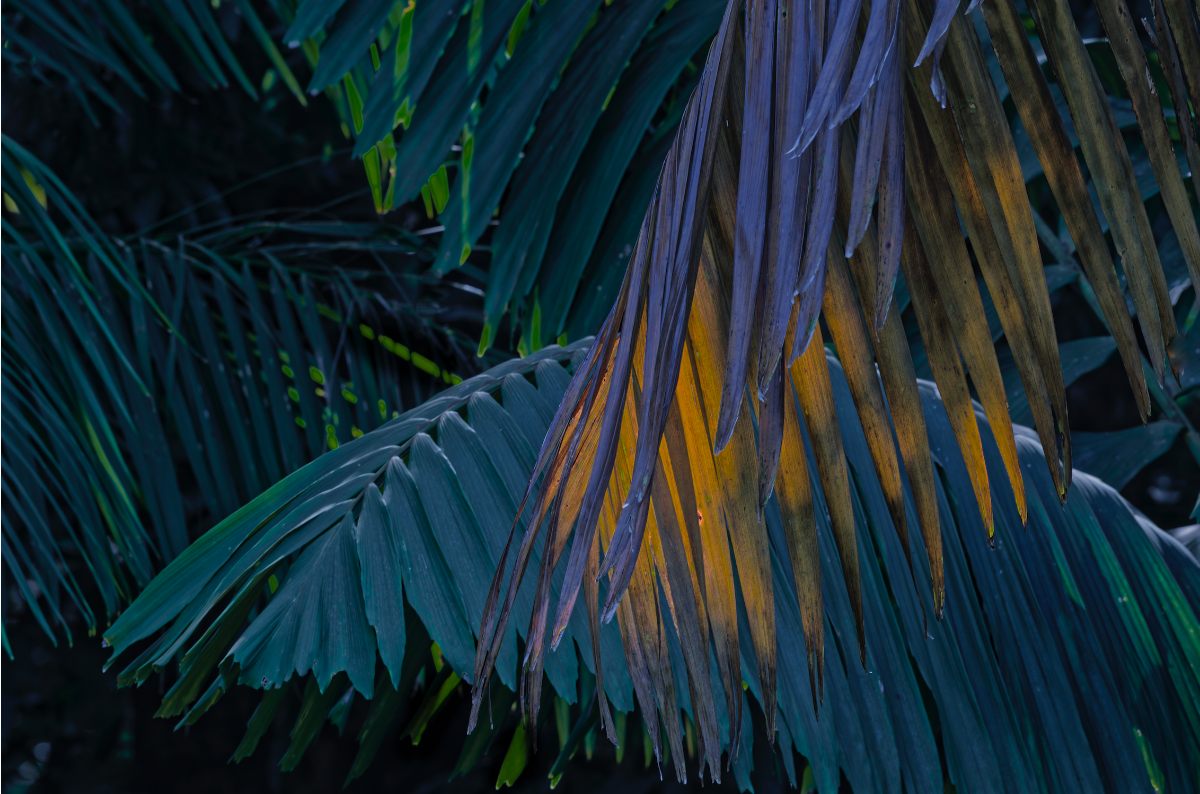
I’ll close with one last memory, captured by Larry Cameron’s gorgeous photograph above. Paula’s favorite time of day, Larry remembered, was the gloaming—twilight or dusk, with its mesmerizing, fleeting glow. During his stay last week, Larry shot only in the liminal light of the gloaming, and only from inside William and Paula’s house. To me, this photograph holds what William and Paula may have seen in their many early mornings together, and what we now see, as we tend an ever changing garden made of their long evenings and astonishment.
With warm regards,
Sonnet
