
Nurturing Imagination & Attention
Dear Friends of The Merwin Conservancy,
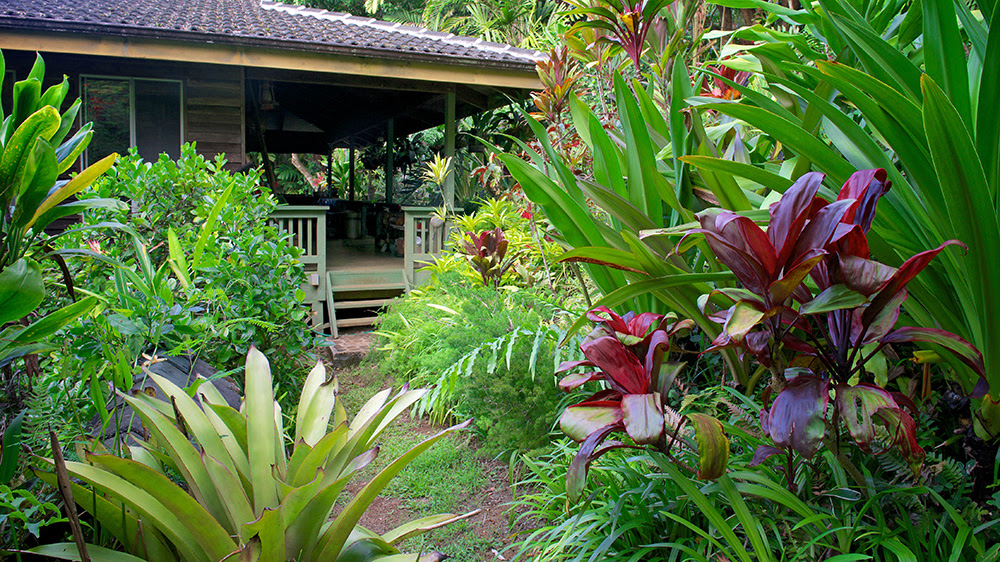
Many times over the past few weeks I’ve taken the path through the palms to William and Paula’s house. I savor the beauty of the meandering approach, then stand still at the front door to savor the gratitude I feel. To be among those charged with the well-being of this home, garden, and legacy; to join others in envisioning the future of a place that will nurture imaginations and tend what is made of them; to have the privilege and pleasure of sheltering here, in this place, through our anxious age.
Last week, here inside the house, I found a handwritten and somewhat tattered early draft of what would become the conservation easement for the palm forest. In it, William writes of the original siting of the house in the early 1980s, and of how one might encounter it. Some of the words I cannot make out, but here is a taste:
My original acquisition of this land, the siting and design of the home, the cultivating and planting of palms, none of them was undertaken in the name of convenience. None of the places that I have most loved has been convenient [. . .] So, the house as it is. The access is not convenient. It was not designed to be. One of the principal models in my mind was [?] in a description by John Blofeld of Taoist monasteries in the mountain parts in China, which he found his way to in the early part of the 20th century.
It gets too hard to read from there, but a later, typewritten draft that I found in a drawer nearby carries the idea forward:
One image that I had thought of for some time came from a book by John Blofeld, who had written about his wanderings in the mountains of China, in the first quarter of the twentieth century, visiting small Taoist temples and monasteries there. He told of the great beauty of the forested mountains, and of walking on footpaths and finding the places, the views, more and more beautiful, and then realizing that the forest had been cared for, with a very light touch, and then finding a few flat stones paving the earth, and catching sight, beyond a ridge, of the tops of walls and the brown-tiled roofs of a small monastery, hidden until he had almost reached it. I worked for months trying to design the house I wanted. I knew from the start just where I wanted it, on a slope above the stream bed and the trees there.
I carry this image with me when I make my way back out along the path, back into our anxious age. I carry this thought, too: when the drive and desire for convenience are suspended (or outright rejected), intention and presence of mind ease their way back in.
Our vision for this place is to share it in ways that nurture imagination and attention as habits of mind, as practices. Our approach will have to meander around our present challenges, and will be all the more intentional for it. Perhaps during this Great Pause we can part ways with an illusory force that falsely promises a direct route to what we desire, and savor the beauty that awaits us along a more scenic route.
I hope you’ll get a sense of how we’ll share what we find along this route in the coming months: tea canisters labeled with poetic names and tucked into a cedar cabinet; poems that speak to and beyond our moment; books that take our thinking down new paths. And soon, you can contribute to our thinking as we begin an inclusive interpretive planning process to gather your stories and ideas. Together we’ll move mindfully toward the time when The Merwin Conservancy will find its fullest expression. The house, dojo, and garden shed will be restored and self-sustaining, and the garden will have expanded into parts of the land that have yet to be planted up. This extraordinary place as a whole will be a generative site of new ways of thinking, being, and making that reinvigorate our relation to the world around us.
Wishing you well,
Sonnet
